


Recovering from an eating disorder can look very different for each person. Each stage will bring its own triumphs and challenges to both the person living with the eating disorder and to those caring for and supporting them. You should keep in mind that you don’t have to do all of this on your own. There is information available to provide you with skills and coping mechanisms to help you throughout this difficult time.
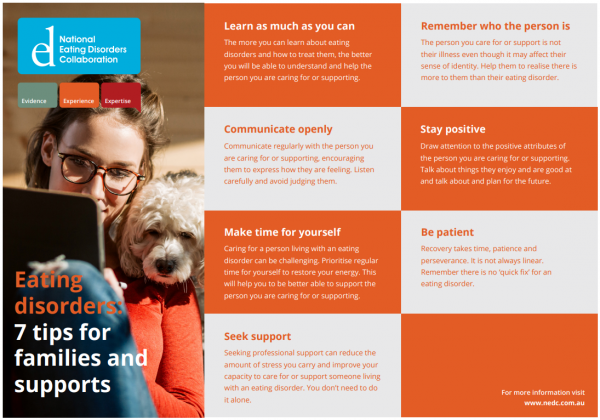
To view or download infographic click here.
To view or download booklet Caring for Someone with an Eating Disorder click here.
Here are some tips to help you along the way:
1. Learn as much as you can
Obtaining the right information and education about eating disorders can help you support and care for someone more easily. The more you learn, the better you will be able to understand what is happening to the person you are supporting.
To find useful resources you can browse NEDC Resources as well as our Families and Supports page.
Other pages that may be helpful include:
- Learn more about the particular type of eating disorder
- Familiarise yourself with the stages of change that are experienced by someone experiencing an eating disorder
- Develop an understanding of the different treatment options and approaches available
If you need further assistance, contact your state or territory eating disorder support organisation or contact Butterfly’s National Helpline.
2. Remember who the person is
The person you care for and support is not their illness even though it may affect their sense of identity. Remember that they are still the same person they have always been. Separating the person from the illness can be helpful for you and the person you are caring for. This is called externalisation and helps all involved to see the illness as the problem and the person you are caring for as part of the solution. This can be very empowering for everyone involved, as the target of all treatment is the problem not the person.
Remind yourself that the person you care for is still your son, daughter, friend, sister, brother, grandchild, mother, or father, and that the eating disorder is something that is happening to them.
3. Communicate openly
Communication is important in fostering treatment and recovery. Communicate openly, without judgement or negativity, and allow the person to express how they are feeling. Avoid focusing on food and weight and instead try to talk about the feelings that may exist beneath the illness. Pay attention to the person’s non-verbal reactions and body language and encourage them to trust and speak openly with you. Let them know their thoughts and feelings are valid.
Access further information on how to have a conversation with someone you are concerned about here.
4. Stay positive
Caring for someone with an eating disorder can be very challenging. Draw attention to the positive attributes of the person you are looking after and talk about things that they enjoy or are good at.
It is a good idea to find opportunities to involve the person you are caring for in things they enjoy, such as watching movies, listening to music, jigsaws, craft, or other hobbies; these are activities that can be completed together and that promote positivity.
Talk about the things they enjoy and are good at and the things you love about them. Reminding the person of their life outside of their illness can help them to realise there is more to them than their eating disorder.
5. Make time for yourself
Prioritising regular ‘time outs’ for yourself can restore your energy and rejuvenate your mind. Take small breaks to help you stay relaxed, calm and patient during the treatment phase. It also means that your own emotional and physical health continue to be fostered throughout this difficult time. Aim to make time for yourself to do the things that you enjoy, such as visiting friends, going for walks, doing some exercise, reading a book or watching a film. The better you care for yourself, the more you will be able to help the person you are caring for.
6. Be patient
People experiencing an eating disorder can experience a range of different and conflicting emotions all in one day. This can be distressing for them, for you, and for your support networks, and may be challenging to manage. The road to recovery is filled with different emotions and can be a long journey. It is important to be as calm and patient as possible throughout their recovery and remember that there is no quick fix. Recovery takes time and patience. Try to focus on the more positive aspects of the experience and/or the long-term goal of recovery.
7. Seek support
Seeking professional support from a medical or mental health professional can reduce the amount of stress you carry and improve your capacity to care for someone experiencing an eating disorder. Eating disorder organisations and support groups can help you through challenges by providing guidance, strategies, and resources, and connect you with others going through similar experiences.
Being a carer
The effects of an eating disorder are often felt not only by the person experiencing it, but also by their family and support network. A carer or support can be any person involved in caring for someone living with an eating disorder. This may include a parent, partner, friend, sibling, grandparent, child, grandchild, relative, neighbour, colleague or any other person caring for or supporting someone living with an eating disorder.
If you are caring or providing support for someone experiencing an eating disorder it is possible that at certain times you may feel:
• Distressed about what is happening to the person you care for or support, to you, and/or your family.
• Burnt out from the demands of caring for someone experiencing an eating disorder in addition to family life, personal life, and work commitments.
• Guilty about your ‘role’ in the illness. You may fear that you are in some way responsible.
• Confused about the best way to help, both on a daily basis and within the long-term goal of recovery.
• Anxious and afraid about the physical and psychological changes you are observing in the person you care for.
• A sense of hopelessness about your ability to provide support to the person experiencing an eating disorder
• Sad that the eating disorder has taken over the person you care for and your family
All of these feelings are normal and valid. Caring for and supporting someone experiencing an eating disorder is a huge responsibility and can come with considerable personal strain. You may want to ‘fix’ things and feel frustrated when you can’t.
Learning more about the experience of living with an eating disorder can help you to better understand and cope with the changes you are seeing in the person you care for.
If you suspect someone you know is experiencing an eating disorder, it is important to support them to seek help immediately. The earlier someone seeks help the closer they are to recovery. Your GP is a good ‘first base’ and can refer you to a practitioner with specific knowledge in eating disorders. For information about eating disorder-specific clinical services, see our Service Locator.